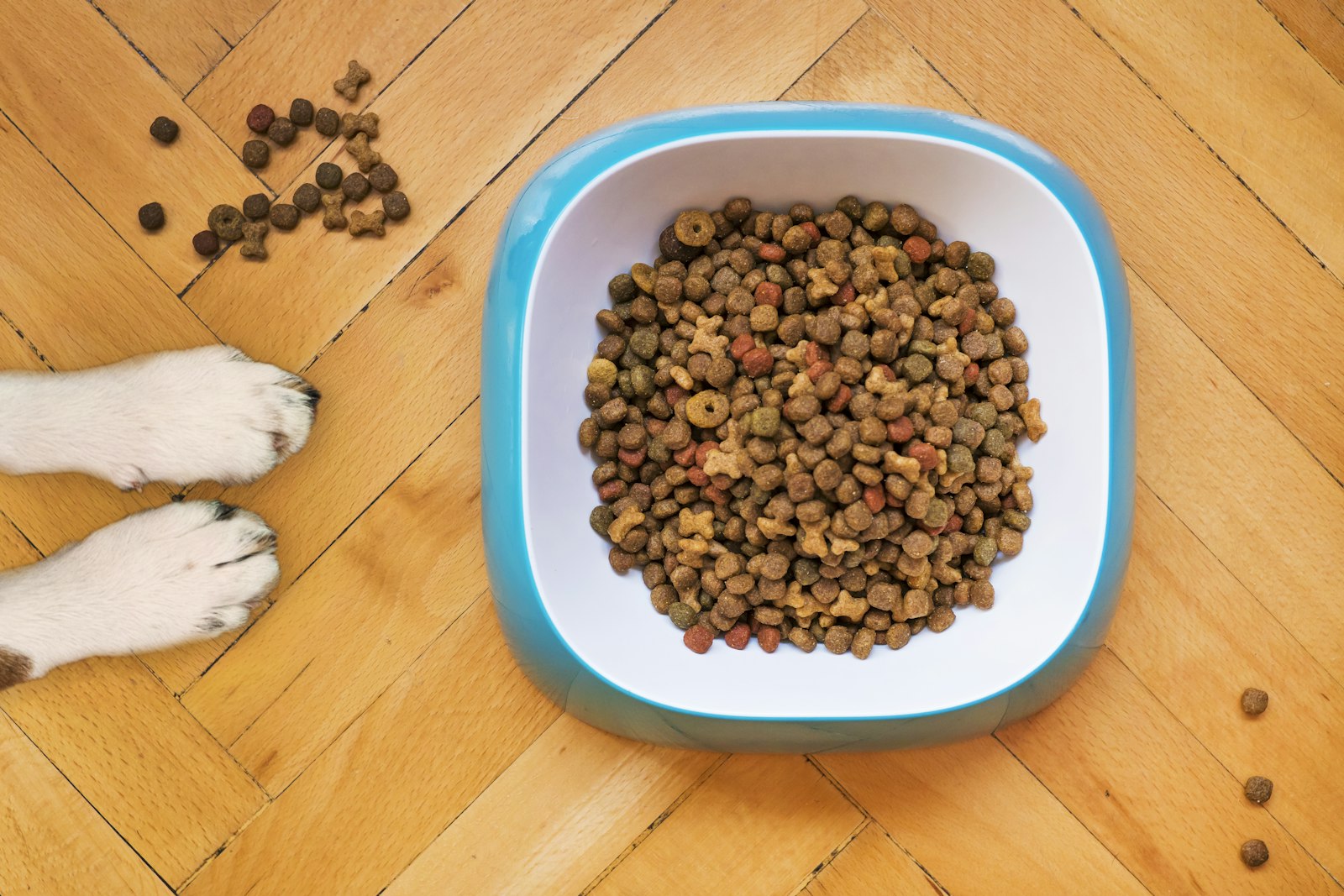




How much should I feed my dog? Portions, calories and body condition score
Feeding guides on pet-food bags are a starting point, not a prescription. Body condition score — not the number on the bag — is the tool that tells you whether your dog is eating the right amount.
Canine obesity is one of the most prevalent preventable health conditions in companion animals. The Association for Pet Obesity Prevention (APOP) 2023 Clinical Survey estimated that approximately 59% of dogs in the United States are overweight or obese — a figure that has risen steadily over previous surveys (note: figures vary by study population and definition). The consequences are serious: reduced lifespan, increased risk of diabetes, orthopaedic disease, breathing difficulties, and certain cancers.
The feeding guides printed on pet-food packaging are population averages, based on a typical sedentary adult dog at average weight. Your dog's actual requirement depends on their ideal body weight, age, activity level, reproductive status (intact vs desexed), health conditions, and the energy density of the specific food you are using.
The most reliable way to know whether you are feeding the right amount is the body condition score (BCS) — a hands-on assessment you can do at home.
What is body condition score?
Body condition score is a standardised 9-point scale (or sometimes 5-point) developed by Laflamme (Nestlé Purina Research) and widely endorsed in veterinary practice, including by AAHA. It assesses fat cover over the ribs, waist, and base of tail by sight and touch, not by scale weight alone. Scale weight is misleading because it depends on breed, size and frame — BCS measures actual fat cover.
- BCS 1–3: underweight. Ribs, spine and hip bones visible from a distance; no palpable fat cover
- BCS 4–5: ideal. Ribs easily felt but not visually prominent; waist visible from above; abdominal tuck visible from the side
- BCS 6–7: overweight. Ribs palpable only with firm pressure; waist barely visible; some fat deposits over the lower back
- BCS 8–9: obese. Ribs not palpable under heavy fat cover; waist absent; marked fat deposits on the neck, limbs, and base of tail

How to calculate a starting daily portion
The calculation below gives a rough starting point. Adjust based on your dog's BCS after 2–4 weeks of feeding at that amount.
- Step 1: Find your dog's ideal body weight (ask your vet if unsure — this is not necessarily their current weight if they are over or underweight)
- Step 2: Determine their Resting Energy Requirement (RER): RER (kcal/day) = 70 × (ideal weight in kg)^0.75
- Step 3: Multiply by a life-stage factor: intact adult ×1.8, desexed adult ×1.6, active working dog ×2.0–5.0, senior dog ×1.4 (these are AAHA guidelines)
- Step 4: Divide the target daily kcal by the food's caloric density (kcal/cup or kcal/100g, usually on the pack or manufacturer website)
- Step 5: Weigh the food — measuring cups are notoriously inaccurate; a kitchen scale is more reliable
How to use BCS to adjust portions over time
Weigh and BCS-score your dog monthly. If BCS creeps above 5, reduce the daily portion by 10% and recheck in 4 weeks. If BCS drops below 4, increase by 10%. Make changes gradually — rapid weight loss (>1–2% of body weight per week in adults) is not healthy. Rapid weight gain should prompt a vet visit to rule out underlying causes.
Treats and extras: the hidden calorie problem
Treats, chews, training rewards, and table scraps should account for no more than 10% of total daily calorie intake. A single medium-sized commercial dog biscuit can represent 10–30% of a small dog's daily allowance. If you train with treats, use tiny pieces (pea-sized), and reduce the meal portion accordingly.

Feeding frequency: how many meals per day?
- Puppies under 12 weeks: 3–4 small meals per day
- Puppies 12 weeks–6 months: 3 meals per day
- Adults (1 year+): 1–2 meals per day; 2 is generally preferred for gastrointestinal comfort and to reduce bloat risk in large breeds
- Seniors: discuss with your vet; metabolic rate decreases and some health conditions require dietary changes
- Large and giant breeds: twice-daily feeding and avoiding vigorous exercise immediately before/after meals may reduce gastric dilatation-volvulus (bloat) risk
Sources & references
- AAHA — Body condition scoring in dogs
- Association for Pet Obesity Prevention (APOP) — 2023 survey results
- Tufts University Cummings School — How much should I feed my dog?
- WSAVA Global Nutrition Guidelines
- VCA Animal Hospitals — Obesity in dogs
OurPetCircle content is researched from the sources above and is queued for veterinary sign-off. It is educational and not a substitute for advice from your own vet.