



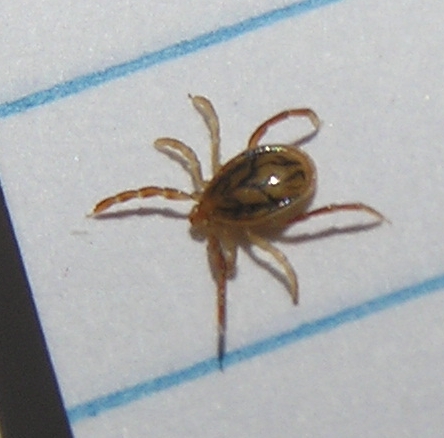
Paralysis Tick in Dogs: Symptoms, Emergency Treatment & Costs in Australia
Ixodes holocyclus can paralyse a dog's breathing muscles within days of attaching. Here is how to spot the signs early, what emergency treatment involves, and what tick antiserum and hospitalisation cost in Australia.
Every spring, Australian emergency vet clinics along the east coast see a predictable surge in one of the most acute conditions in companion-animal medicine: paralysis tick toxicosis. The culprit is Ixodes holocyclus, the Australian paralysis tick, and the danger it poses is unlike almost any other parasite dog owners will encounter. A single engorged female tick can inject enough neurotoxin to cause fatal respiratory paralysis in an adult dog within 24 to 48 hours of the first visible signs — and by the time signs appear, the tick has often been feeding for several days already.
This is not a "wait and see" parasite. It is a genuine veterinary emergency, and knowing the early signs — and acting on them immediately — is the single biggest factor in whether a dog survives.
Where paralysis ticks live in Australia
Ixodes holocyclus is endemic to a band running down Australia's eastern seaboard, roughly from Cape York in far north Queensland down through coastal and near-coastal New South Wales and into eastern Victoria (as far as Gippsland and the Otways). It favours humid, bushland-adjacent habitat and relies on wildlife — bandicoots, possums and echidnas — as reservoir hosts that carry ticks from bush reserves into suburban gardens. Dogs in Brisbane, the Gold and Sunshine Coasts, Sydney, the NSW Central Coast and South Coast, and Melbourne's outer bushland-fringe suburbs are all within the endemic range. It is not present in a similar way across the arid interior, South Australia, Western Australia or Tasmania.
Peak season is spring through early summer — roughly September to January — when tick numbers surge in warm, humid conditions. But the risk is not confined to a single season. In warmer coastal pockets of Queensland and northern NSW, ticks can be active year-round, and the Australian Veterinary Association advises owners in endemic areas not to relax prevention once summer ends.
Why the paralysis tick is different from other ticks
Most tick species found around the world are dangerous chiefly because they transmit bacterial or protozoal pathogens — think Lyme disease or ehrlichiosis. Ixodes holocyclus works differently: while feeding, the adult female injects a potent neurotoxin (collectively called holocyclotoxin) directly into the bloodstream through her saliva. The toxin blocks the release of acetylcholine at the neuromuscular junction — the chemical signal that tells muscles to contract — producing a progressive, ascending flaccid paralysis that begins in the hindquarters and climbs toward the head and chest. The mechanism was characterised in detail by Chand et al., published in Scientific Reports in 2016, confirming a pre-synaptic, calcium-dependent block of acetylcholine release.
Because this is a direct neurotoxin rather than an infection, antibiotics do nothing. The only effective treatments are tick antiserum (TAS) to neutralise circulating toxin, and hospital-level supportive care while the dog's own nervous system recovers — which is exactly why tick paralysis cannot be managed at home.
Recognising the signs: the progression owners must know
Signs of tick toxicosis typically begin three to five days after a tick first attaches, and the progression from mild to critical can happen within hours once it starts. Early recognition — and treating any of these signs as an emergency rather than something to monitor — is what saves lives.
- Change in bark or voice — often the very first sign owners notice. The laryngeal muscles are affected early, producing a hoarse or altered bark, or unusual quietness.
- Vomiting or regurgitation — retching, bringing up food, or difficulty swallowing can appear in the early stages, sometimes before obvious weakness.
- Hindlimb weakness — wobbliness in the back legs, stumbling, reluctance to jump or climb stairs. This is usually the earliest visible motor sign, and it ascends: back legs first, then the whole body.
- Progressive weakness to inability to stand — the dog may drag its hindquarters or become completely unable to bear weight as paralysis climbs.
- Laboured or grunting breathing — as paralysis reaches the muscles of the chest wall and diaphragm, breathing becomes visibly effortful. This is a critical sign that respiratory failure may be imminent.
- Retching, gagging or megaoesophagus — oesophageal paralysis can cause pooling of saliva and food that risks being inhaled into the lungs (aspiration pneumonia), which complicates treatment and recovery.
- Respiratory arrest — without treatment, ascending paralysis eventually reaches the muscles of breathing; death from respiratory failure can occur within hours of this final stage.
What to do if you find a tick or suspect toxicosis
- Do a full-body check now: run your fingertips through the coat, especially the head, ears (inside and behind), neck, lips, between the toes, the groin and armpits, and under the collar.
- If you find a tick, remove it with fine-tipped tweezers or a purpose-made tick-removal tool: grasp as close to the skin as possible and pull firmly and steadily outward. Do not use petroleum jelly, nail polish, heat or burning — these can cause the tick to inject more toxin before detaching.
- Keep the removed tick in a sealed container and bring it with you — species identification helps the vet's assessment.
- Call the vet or an emergency clinic on your way, so staff can prepare — tick toxicosis cases often need immediate triage.
- Keep your dog calm, still and cool during transport. Exertion and overheating increase oxygen demand on already-compromised muscles.
- Do not wait to "see if it gets worse." Go now. Once ascending paralysis reaches the chest, minutes matter.
Treatment: what happens at the vet
Treatment centres on tick antiserum (TAS) — a hyperimmune serum derived from canine donors with antibodies to holocyclotoxin. TAS neutralises unbound toxin circulating in the blood; it is given intravenously, usually diluted with saline and infused slowly to reduce the risk of an anaphylactic-type reaction, which is a recognised possibility with any biological antiserum product. Dosing and infusion rate are determined entirely by the treating veterinarian based on the individual dog's size and clinical severity — this is never something an owner administers or calculates at home.
Supportive hospital care runs alongside antiserum: intravenous fluids, sedation to reduce oxygen demand, supplemental oxygen for dogs with breathing difficulty, careful temperature management (overheating significantly worsens outcomes), and monitoring or treatment for aspiration pneumonia if it develops. It is important for owners to understand that signs can continue to worsen for several hours after antiserum is given, before the dog starts to improve — the toxin already bound to nerve terminals has to be cleared by the body's own processes. Most dogs need 24 to 72 hours of hospitalisation; severe cases with respiratory compromise may need longer, including, in the most critical cases, ventilator support.
“TAS is virtually a preserved form of plasma, and most patients tolerate it extremely well, but administration can still lead to potential reactions.”
What tick paralysis treatment costs in Australia
Cost varies widely depending on how early treatment starts, the dog's size, how many vials of antiserum are needed, and whether intensive care (oxygen support, ventilation) is required. The figures below are indicative bands drawn from published Australian emergency-vet and pet-insurance industry sources — they are not quotes, and every clinic sets its own pricing. Confirm current costs directly with the treating clinic; pet insurance with tick-paralysis cover can materially offset a bill of this size.
A dog caught early with mild signs may be treated and discharged for well under A$1,000; a dog that reaches respiratory failure and needs ventilation can run past A$10,000 — the gap is almost entirely about how fast the owner acted.
Prevention: no product is 100% effective
This point cannot be overstated: no tick-prevention product available in Australia is completely protective against paralysis tick toxicosis. Preventives reduce the chance a tick attaches and survives long enough to deliver a toxic dose — they do not guarantee zero risk. Dogs in endemic areas need both a vet-recommended preventive AND a genuine daily hands-on tick search, especially September through January.
- Isoxazoline-class oral chewables (fluralaner, sarolaner, afoxolaner, lotilaner) — monthly or three-monthly preventives with demonstrated efficacy against I. holocyclus in randomised controlled trials, including a 2015 Parasites & Vectors trial of fluralaner (Becskei et al.) and a 2017 comparative speed-of-kill study of sarolaner versus afoxolaner (Snyder et al.). Not suitable for every dog — your vet will advise.
- Topical spot-on acaricides — confirm the specific product is registered and tested for paralysis-tick efficacy in Australia, not just for other tick species.
- Tick collars — some have Australian efficacy data against I. holocyclus; ask your vet to confirm before relying on one alone.
- Daily hands-on tick searches — the non-negotiable safety net regardless of which product you use, every single day during peak season in endemic suburbs.
Common questions about paralysis tick in dogs
How long does it take for a paralysis tick to affect a dog?
Clinical signs typically begin three to five days after a tick first attaches, though this can vary. Once signs start, they can progress from mild hindlimb weakness to severe, life-threatening paralysis within hours to a couple of days — which is why any early sign should be treated as an emergency rather than monitored at home.
How much does tick paralysis treatment cost in Australia?
Costs vary widely by severity and clinic, roughly from several hundred dollars for a mild case caught early and treated without intensive care, up to A$5,000–10,000 or more for a severe case requiring ICU-level support or ventilation. Tick antiserum, hospitalisation days and any oxygen/ventilator support are the main cost drivers. Confirm current pricing with your treating clinic; pet insurance can help offset the cost.
What are the first signs of tick paralysis in a dog?
The earliest signs are often a change in bark or voice, vomiting or retching, and wobbliness or weakness in the back legs. Any of these in a dog from a tick-endemic region of Australia's east coast warrants an immediate vet visit, not a wait-and-see approach.
Can a dog survive tick paralysis?
Yes — with prompt tick antiserum treatment and hospital supportive care, most dogs recover, especially when treatment starts before severe respiratory compromise develops. Outcomes are worse the longer treatment is delayed, which is why acting on early signs immediately is critical.
Is tick paralysis only a risk in spring and summer?
Spring through early summer (September to January) is peak season on Australia's east coast, but Ixodes holocyclus can be active year-round in warmer, humid coastal regions of Queensland and northern New South Wales. Owners in endemic areas should not stop prevention outside the peak months.
Sources & references
- Chand KK et al. (2016) — Tick holocyclotoxins trigger host paralysis by presynaptic inhibition of calcium-dependent acetylcholine release. Scientific Reports / PMC4937380
- Becskei C et al. (2015) — Randomised controlled trial of fluralaner (Bravecto) against Ixodes holocyclus in dogs. Parasites & Vectors / PMC
- Snyder DE et al. (2017) — Comparative speed of kill: sarolaner vs afoxolaner against Ixodes holocyclus. PMC
- Animal Emergency Australia — Tick paralysis and tick anti-serum (TAS)
- MSD Veterinary Manual — Tick paralysis in animals
- Ixodes holocyclus — Wikipedia (distribution and biology overview)
- Australian Veterinary Association — tick paralysis prevention guidance
OurPetCircle content is researched from the sources above and is queued for veterinary sign-off. It is educational and not a substitute for advice from your own vet.