
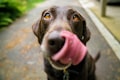




Basset Hound
Also known as: Basset
A low-slung, droopy-eared French scent hound with one of the finest noses in dogdom and a famously laid-back, friendly temperament. Basset Hounds are gentle, sociable and good-natured, bringing a charming, unhurried personality and an endearing fondness for their people to easygoing family homes.
Origin and purpose
The Basset Hound descends from French scent hounds (the name derives from "bas", meaning low), bred deliberately short-legged so hunters on foot could keep up as the dog tracked rabbits and hare by scent. It was refined into the modern show breed largely in 19th-century Britain.
Temperament
Kennel authorities describe the Basset as devoted, gentle, placid and sociable — wonderful with children and other dogs — but also notably independent and stubborn, ruled by its nose and slow to obey when a scent beckons. Patient, reward-based training works best. As ever, the individual dog predicts behaviour better than the breed (Morrill et al., Science 2022).
Health and longevity
The Basset's conformation drives several characteristic health concerns. Keep it lean, limit jumping, and clean the ears routinely.
Common health conditions
Living with a Basset Hound in Phuket
This section is specific to Phuket (Department of Livestock Development (DLD)). The rest of this guide applies to the breed anywhere.
Soi Dog Foundation / local Phuket rescue groups: Not eligible
This breed is not eligible for Soi Dog Foundation / local Phuket rescue groups.
Licensing
No nationwide dog licensing fee. Annual rabies vaccination legally required under the Rabies Control Act B.E. 2535 (1992) — Thailand is NOT rabies-free. Phuket has a large managed stray dog population via the Soi Dog Foundation's TNR program; DLD Phuket Province administers annual vaccination drives in all districts. Source: DLD Thailand (dld.go.th).
Climate & exercise in Phuket
Phuket is equatorial maritime island; two monsoon seasons — SW Monsoon (May-Oct, heavy rain and swell), NE season (Nov-Apr, tourist high season, calmer); year-round heat (28-36°C); no cool season. walk before 7:30am or after 5:30pm year-round; beach walks (Nai Harn, Rawai) are most comfortable before 8am; bring fresh water on all outdoor walks — never allow dogs to drink seawater. Phuket's equatorial heat is year-round — brachycephalic breeds face elevated heatstroke risk at any time outside early-morning windows. Beach access creates specific hazards: saltwater ingestion (toxicosis), sea urchin spine injuries on reef-fringe beaches, and jellyfish contact during monsoon season. Always bring fresh water to the beach; keep dogs away from beached jellyfish and rocky reef areas.
Parasite prevention
Plan for year-round heartworm prevention essential (Culex and Aedes mosquitoes active all 12 months; SW Monsoon post-rainfall significantly increases mosquito breeding); tick-borne disease risk in semi-rural and forested areas (Thalang, Mai Khao, Doi Suthep foothills); annual rabies vaccination legally required — Phuket stray population makes contact with unvaccinated dogs more likely than in Bangkok.
Cost of ownership in Phuket
Local Basset Hound cost figures for Phuket are being verified. Budget for purchase or adoption, initial setup, food, grooming, routine veterinary care, parasite prevention and pet insurance. Figures are quoted in ฿.
Health & longevity
Responsible breeders health-test their breeding dogs. Ask to see current certificates before committing.
Nutrition note: Strongly obesity-prone with a long back — strict portion control is a back-protection measure as much as a weight one.
Known breed conditions
DNA & screening panel
Cost of ownership
FLAG: indicative Singapore estimate only — back (IVDD) and recurrent ear issues can add cost.
Registries
Sources & references
- AKC — Basset Hound breed standard & traits[Breed standard / registry]
- The Kennel Club (UK) — Basset Hound[Breed standard / registry]
- Merck Veterinary Manual — hereditary and breed-associated disease[Veterinary reference]
- Orthopedic Foundation for Animals (OFA) — breed health screening / CHIC testing[Peer-reviewed / VetCompass / OFA]
- NParks/AVS — Pets in HDB flats (approved small breeds; ≤55 cm shoulder height)[Breed standard / registry] · checked June 2026
- Morrill et al., "Ancestry-inclusive dog genomics…", Science 376 (2022) — breed ≈ 9% of behaviour[Peer-reviewed / VetCompass / OFA] · 2022
Source tiers: 1 = breed standard / registry authority; 2 = peer-reviewed / VetCompass / OFA; 3 = veterinary reference; 4 = encyclopaedic. OurPetCircle cites only tiers 1–4 and never blogs or e-commerce pages. Behavioural traits carry low confidence — breed explains ~9% of individual behaviour variation (Morrill et al., Science 2022).
Image credits
- Image 1: Cali1008 · Public domain · via Wikimedia Commons
- Image 2: Wikimedia Commons contributor · Public domain · via Wikimedia Commons
- Image 3: Eda · Public domain · via Wikimedia Commons


