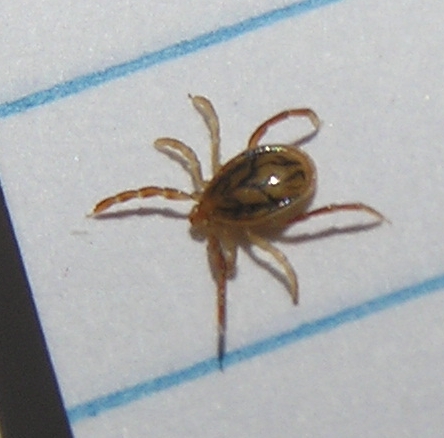
Paralysis tick in Sydney dogs: prevention, recognition, and emergency action
Ixodes holocyclus is endemic across greater Sydney's bushland fringe and produces a neurotoxin that can kill a dog within 24 hours. Here is what every Sydney dog owner needs to know — from daily tick searches to recognising the earliest signs and acting fast enough.
There is no other parasite in Australia that carries the same immediate, life-threatening urgency for dog owners as Ixodes holocyclus — the Australian paralysis tick. In most parts of the world, ticks are a nuisance: they bite, they may transmit bacterial infections, and they warrant routine prevention. In coastal eastern Australia, the paralysis tick is something categorically different. A single engorged female tick can produce enough neurotoxin to kill an adult dog within 24 to 48 hours of the first signs appearing. This is not a condition to monitor at home. It is a veterinary emergency.
Greater Sydney sits in the heart of I. holocyclus territory. The tick is endemic to the eastern seaboard of Australia, and while it is most concentrated in specific bushland-adjacent areas — the Northern Beaches, Ku-ring-gai, Hornsby, the Georges River bushland corridor, the Royal National Park fringe, and the Blue Mountains edges — it is not absent from the broader metropolitan area. Wildlife including bandicoots, possums and echidnas serve as reservoir hosts and range across the city's green spaces, carrying ticks from bush reserves into suburban gardens. No Sydney dog is entirely beyond reach.
What makes Ixodes holocyclus dangerous: the toxin
Ixodes holocyclus is a three-host tick: larvae, nymphs and adults each feed on a separate animal host before dropping off to moult or lay eggs. It is the adult female — fully engorged with blood after several days of feeding — that is the primary danger to dogs. As she feeds, she injects a potent neurotoxin into the bloodstream through her saliva.
The toxin, collectively referred to as holocyclotoxin, acts at the neuromuscular junction by inhibiting the pre-synaptic release of acetylcholine — the neurotransmitter that signals muscles to contract. The result is a progressive, ascending flaccid paralysis: motor weakness that begins in the hindquarters and climbs toward the head. Crucially, this is not a bacterial or viral infection. It is a direct neurotoxin. Antibiotics and anti-parasitics cannot treat established toxicosis — the only effective treatment is tick antiserum and supportive care, administered by a veterinarian. The mechanism of holocyclotoxin at presynaptic terminals was characterised by Chand et al. and published in Scientific Reports in 2016, confirming the pre-synaptic calcium-dependent inhibition model.
Where and when: geography and seasonality in Sydney
Paralysis tick risk in Sydney is not uniform, but it covers far more of the city than many owners realise. The highest-risk areas are those where bushland, wet sclerophyll forest, and residential development interface — the Northern Beaches (Pittwater to Manly), Ku-ring-gai and Hornsby Shires, the Sutherland Shire fringe bordering Royal National Park, and the Georges River bushland corridor. The Blue Mountains edge suburbs (Springwood, Blaxland, Glenbrook) carry meaningful risk for dogs walked in national park areas.
Inner-west and CBD suburbs carry lower but not zero risk. Wildlife — particularly brush-tailed possums and bandicoots, which are significant tick reservoir hosts — range across suburban Sydney including inner suburbs with green corridors. A tick can drop from a possum onto a footpath, garden, or dog run. Risk follows bushland proximity, but it does not stop at the postcode boundary.
Seasonal peak is spring through early summer: September to February. Tick numbers tend to be highest during warm, humid conditions. However, Sydney's mild winters mean ticks are present year-round in the metropolitan area. There is no "safe season" for Sydney dogs. The Australian Veterinary Association and the University of Sydney's veterinary faculty both advise year-round prevention for dogs in endemic areas — not a spring-only approach.
Signs of paralysis tick toxicosis: what to watch for
The progression of tick toxicosis is predictable but rapid. Clinical signs typically appear three to four days after the tick first attaches — which means the tick may already be engorged and difficult to spot by the time signs begin. Owners familiar with the early warning signs have the best chance of getting their dog to a vet in time for effective treatment.
- Early — change in bark or voice: often the first sign owners notice. The laryngeal muscles are affected early by the ascending paralysis, causing a characteristic change in pitch or hoarseness. Some dogs become unusually quiet.
- Early — vomiting or retching: dogs often vomit in the early stages of toxicosis. Retching without producing food, or difficulty swallowing, can be an early indicator.
- Early — hindlimb wobbliness: unsteadiness in the back legs, stumbling, or reluctance to climb stairs or jump. This is the earliest visible motor sign.
- Progressive — inability to stand or walk: hindlimb paresis progressing to paralysis. The dog may drag its back end or be entirely unable to bear weight.
- Progressive — laboured breathing: as paralysis ascends to the intercostal and diaphragm muscles, breathing becomes visibly effortful. This is a critical sign — respiratory failure is the immediate cause of death.
- Progressive — megaoesophagus: in some cases, oesophageal paralysis causes pooling of food and fluid that can be aspirated into the lungs, leading to aspiration pneumonia and complicating recovery.
- Late — respiratory arrest: without treatment, ascending paralysis reaches the muscles of breathing. Death from respiratory paralysis can occur within hours of this stage.
Finding and removing ticks: the daily check
Daily full-body tick searches are the single most important habit for dog owners in tick-endemic areas of Sydney, used alongside prevention medication. Ticks prefer warm, sheltered areas of the body where they can feed undisturbed. The most common attachment sites are around the head, face, ears, and neck — but ticks can attach anywhere, including between the toes, in the groin, in the axilla (armpit), under the collar, around the lips, and even inside the ear canal.
- Work systematically with your fingertips through the coat, feeling for small bumps. A female tick early in feeding may be as small as a sesame seed; fully engorged, she can reach the size of a small grape.
- Pay special attention to the head, ears (inside and behind), neck, face, lips and around the eyes.
- Check between every toe and in the webbing.
- Check the groin, axilla, and the skin under the collar — remove the collar for the search.
- If you find a tick: use fine-tipped tweezers or a purpose-made tick removal tool. Grasp as close to the skin as possible. Pull firmly and steadily outward — a twisting motion can help dislodge the mouthparts. The goal is to remove the tick intact, including the mouthparts.
- Do NOT use petroleum jelly, nail polish, heat, or burning to remove a tick. These methods risk causing the tick to inject more toxin before detaching.
- Place the removed tick in a sealed container or zip-lock bag and take it to the vet. Identification of the tick species assists the vet's assessment.
- After removal, monitor your dog closely for 48 hours and seek veterinary attention immediately if any signs of toxicosis appear.
Treatment: what happens at the vet
Treatment for tick toxicosis in Australia centres on tick antiserum (TAS) — a hyperimmune serum derived from canine donors that have developed antibodies to holocyclotoxin. TAS works by neutralising unbound toxin in the bloodstream. It is administered intravenously, typically diluted 1:1 with saline and infused slowly over an hour to reduce the risk of anaphylactic reactions. Standard dosing is approximately 1 mL per kilogram of body weight, up to a maximum dose determined by the treating vet, per Animal Emergency Australia's published guidance.
Supportive care runs alongside antiserum: IV fluids, sedation (which reduces oxygen demand), supplemental oxygen for dogs with respiratory compromise, and management of complications such as aspiration pneumonia. Dogs typically require hospitalisation for 24 to 72 hours, or longer in severe cases. It is important to understand that even after TAS is given, signs may continue to worsen for several hours before improvement begins, as the toxin already bound to nerve terminals must be metabolised. The dog's temperature must also be carefully managed during recovery — overheating significantly worsens outcome, so dogs in hospital are kept cool and calm.
“TAS is virtually a preserved form of plasma, and most patients tolerate it extremely well, but administration can still lead to potential reactions.”
Prevention: the layered approach
No prevention method is 100 per cent effective against paralysis tick — this cannot be stated strongly enough. Dogs in endemic areas of Sydney should be on a veterinary-recommended preventive AND undergo daily tick searches. Prevention medications reduce tick attachment and survival time, which reduces the likelihood of sufficient toxin being delivered; they do not guarantee zero risk.
The Australian Pesticides and Veterinary Medicines Authority (APVMA) registers acaricide products for efficacy against I. holocyclus, and the registration process requires specific testing against this species. Speak to your veterinarian before choosing a product — not all tick-prevention products registered for other tick species have been specifically tested against I. holocyclus. The main product classes available through Australian vet practices include:
- Isoxazoline class oral chewables (fluralaner, sarolaner, afoxolaner, lotilaner): monthly or 3-monthly oral preventives with demonstrated efficacy against I. holocyclus in randomised controlled trials. A 2015 randomised controlled trial published in Parasites & Vectors (Becskei et al.) confirmed fluralaner efficacy against induced I. holocyclus infestations on dogs. A 2017 comparative study (Snyder et al., PMC5320688) examined sarolaner versus afoxolaner speed of kill against I. holocyclus. Isoxazolines are not suitable for all dogs — your vet will assess suitability.
- Topical spot-on products: various actives available as topical treatments; check with your vet that the product is specifically labelled for paralysis tick efficacy in Australia.
- Tick collars: some collars have efficacy data against I. holocyclus; confirm with your vet.
- Combination approaches: many vets in high-risk Sydney suburbs recommend a combination of an oral isoxazoline plus daily tick searches, particularly in spring and summer.
Cats and the paralysis tick
Cats are also susceptible to paralysis tick toxicosis, although they are generally considered slightly more resistant than dogs. The clinical signs are similar — hindlimb weakness, voice change, respiratory distress. A 2022 study published in Veterinary Sciences (PMC9795890) examined a purified canine IgG formulation for treating cats clinically affected by I. holocyclus, with 72 of 76 cats (95%) surviving to hospital discharge, demonstrating positive outcomes with prompt treatment.
A critically important warning for cat owners: many tick-prevention products formulated for dogs — including products in the isoxazoline and permethrin classes — are toxic to cats. Never apply a dog's tick prevention product to a cat. Seek your vet's advice for a feline-specific product. If you have both dogs and cats in the household, ensure a recently treated dog cannot be groomed by a cat until the product has fully dried or been absorbed.
Practical action plan for Sydney dog owners
- Know your suburb's risk level: if you live near bushland — Northern Beaches, Ku-ring-gai, Hornsby, Sutherland Shire, Georges River corridor — treat tick risk as year-round and high. If you're further from bushland, risk is lower but not zero.
- Start a vet-recommended preventive: ask your vet about the most appropriate isoxazoline or topical acaricide registered for paralysis tick use in Australia. Factor in your dog's health history, size, and any use of flea-prevention products to avoid duplication or interaction.
- Build the daily tick search into your routine: make it part of your evening routine after walks, especially September through February. Systematic, hands-on check of the full body.
- Know the removal technique: keep a pair of fine-tipped tweezers or a tick removal tool accessible. Practice the grasp-and-pull technique so you can act calmly if you find a tick.
- Save the nearest emergency vet's number in your phone: tick toxicosis can progress overnight. If your dog shows any sign — change in bark, wobbliness, vomiting — call ahead and go immediately.
- When travelling: if you take your dog hiking in the Blue Mountains, Royal National Park, or anywhere along the NSW coast, do a full tick search immediately after every outing. These environments carry high tick pressure.
Paralysis tick risk in Sydney is heavily concentrated in bushland-adjacent northern, southern and upper-north shore suburbs, but wildlife movement means no postcode has zero risk.
Sources & references
- Chand KK et al. (2016) — Tick holocyclotoxins trigger host paralysis by presynaptic inhibition of calcium-dependent acetylcholine release. Scientific Reports / PMC4937380
- Becskei C et al. (2015) — Randomised controlled trial of fluralaner (Bravecto) against Ixodes holocyclus in dogs. Parasites & Vectors / PMC
- Snyder DE et al. (2017) — Comparative speed of kill: sarolaner vs afoxolaner against Ixodes holocyclus. PMC
- Stone BF et al. (1983) — Immunomic / tick antivenom research; Frontiers in Immunology (2021)
- Westman ME et al. (2022) — Purified canine IgG formulation for cats affected by Ixodes holocyclus. Veterinary Sciences / PMC
- Lohmeyer KH & Pound JM (2022) — Protecting dogs and cats against Ixodes holocyclus: Australian acaricide registration review. ScienceDirect
- Animal Emergency Australia — Tick paralysis and tick anti-serum (TAS)
- RSPCA Australia — Paralysis ticks in cats and dogs
- Ixodes holocyclus — Wikipedia (distribution and biology overview)
- Wikimedia Commons — Ixodes holocyclus photograph (CC BY-SA 2.5, credit: AYArktos)
PawHub content is researched from the sources above and is queued for veterinary sign-off. It is educational and not a substitute for advice from your own vet.