
Restricted and prohibited dogs in NSW: what the Companion Animals Act says and what it means for Sydney dog owners
NSW prohibits five specific breeds and imposes serious conditions on "restricted dogs" declared menacing or dangerous by councils. Here is the full legal picture — including what to do if your dog is declared.
The Companion Animals Act 1998 (NSW) creates two distinct categories of dogs with elevated legal obligations: "prohibited dogs" — five specific breeds that cannot be imported into Australia and cannot be bred — and "restricted dogs" — a category that includes dogs declared dangerous or menacing by a council following an incident or assessment. These are not the same thing, and the confusion between them is one of the most consequential misunderstandings in NSW dog law. Understanding which category applies to a dog, and what the legal obligations are for each, is essential for any NSW dog owner — whether or not they believe their own dog is at risk.
The framework matters for Sydney owners particularly because Greater Sydney's councils are active in enforcement. If a dog causes injury, intimidates a person or animal, or is identified as a breed type on the prohibited list by a ranger or council officer, the consequences are significant and can attach to the dog permanently — following it across ownership changes and council transfers. The more you understand the law before a problem arises, the better positioned you are to respond if one does.
Prohibited dog breeds in NSW: the five breeds
Schedule 1 of the Companion Animals Act 1998 lists five prohibited breeds. These breeds are prohibited from import into Australia under federal law (the Environment Protection and Biodiversity Conservation Act 1999), and it is an offence under the CAA to breed a dog "wholly or substantially" of one of these types in NSW. The five breeds are: the American Pit Bull Terrier (also known as the American Staffordshire Terrier in its show-ring form — though the APBT and the AmStaff are technically distinguishable, the Act's drafting catches both); the Japanese Tosa; the Dogo Argentino; the Fila Brasileiro (Brazilian Mastiff); and the Perro de Presa Canario (Canary Mastiff).
- American Pit Bull Terrier: the most commonly cited prohibited breed in NSW enforcement; the law applies to dogs "of the type" rather than requiring a pedigree certificate
- Japanese Tosa: a large Japanese dog-fighting breed; extremely rare in Australia
- Dogo Argentino: an Argentine hunting and guardian dog; rare in NSW but occasionally imported illegally
- Fila Brasileiro (Brazilian Mastiff): large Brazilian working and guardian breed; rare in NSW
- Perro de Presa Canario (Canary Mastiff): a Canary Islands livestock and guardian breed; has a small but documented presence in Australia
What "prohibited breed" means in practice in NSW
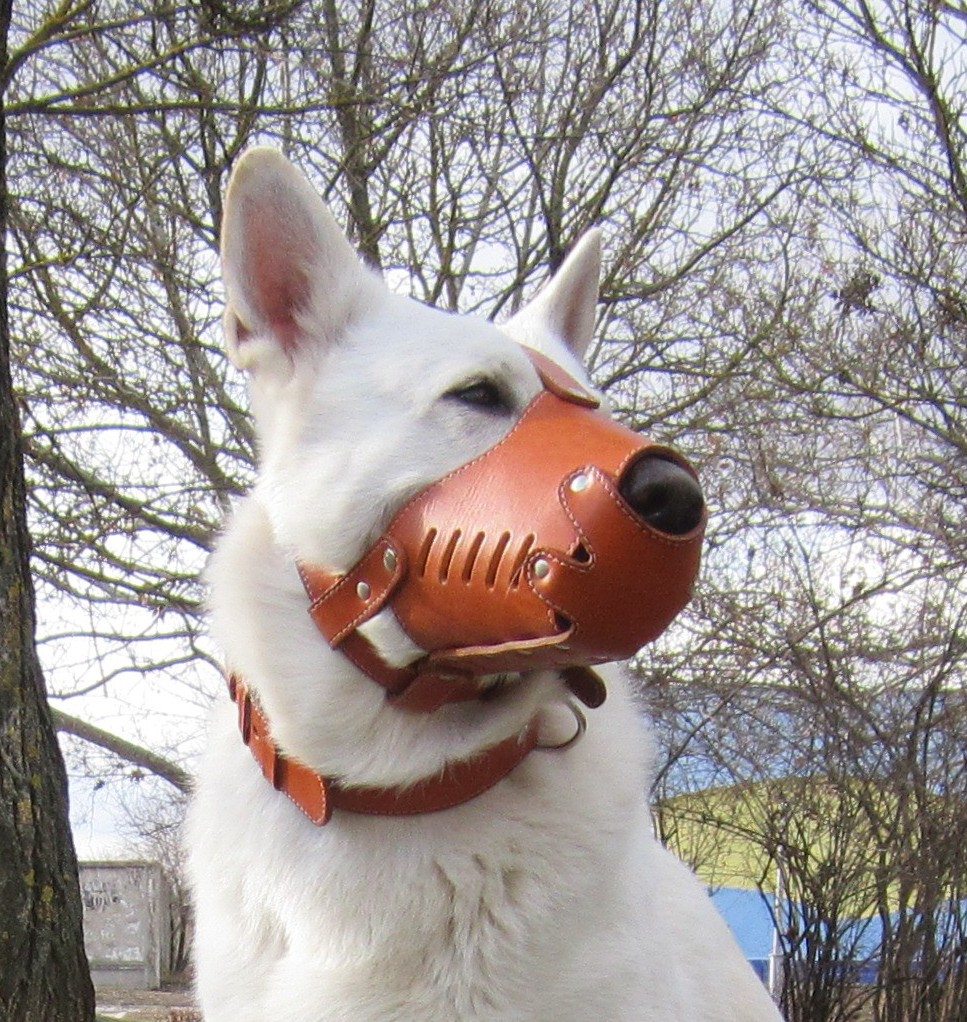
A dog identified as a prohibited breed by a council officer in NSW is, from that point, subject to the restricted dog provisions of the CAA. It must be desexed (if not already); it must be microchipped; it must be kept in an enclosure meeting the requirements of the Companion Animals (Dangerous Dogs) Regulation; it must be muzzled and on a lead of no more than 1.8 metres in any public place; the property must have a sign (available from the council) warning that a restricted dog is kept there; and the owner must notify the council within 24 hours if the dog escapes, attacks, or dies.
Owning or breeding a prohibited-breed dog in NSW that has not been grandfathered under the Act is a criminal offence. Breeding a dog substantially of a prohibited type is also an offence. The practical consequence for most Sydney owners is simpler: if you are considering acquiring a dog that might be confused with a prohibited breed — a muscular, broad-headed, stocky mixed breed that could be assessed as "of the American Pit Bull Terrier type," for example — you are taking on a legal and financial risk that is worth understanding in advance.
The "restricted dog" category: dangerous and menacing declarations
Separate from the prohibited breed list is the "restricted dog" category, which is applied to individual dogs (regardless of breed) that have been declared dangerous or menacing by a local council. This is the more commonly encountered category in Sydney, because it can apply to any dog of any breed that has attacked or threatened a person or animal, or that an authorised officer reasonably believes has the potential to seriously injure a person or animal.
Under the CAA, a council may declare a dog "dangerous" if it has attacked a person or animal without provocation. A council may declare a dog "menacing" if it has displayed a reasonable cause to believe it may attack, or if a complaint has been made and investigated. The declaration process involves a notice to the owner, an opportunity for the owner to respond, and a formal decision. The declaration attaches to the dog, not to the owner — it follows the dog if it is sold, rehomed, or moved to a new council area.
Conditions on restricted dogs in NSW: what owners must do
- Desexing: all restricted dogs (dangerous, menacing, or prohibited breed) must be desexed; if not already desexed at the time of declaration, the owner has 28 days to arrange desexing
- Microchipping: mandatory if not already done; must be recorded on the NSW Pet Registry
- Muzzle in public: the dog must be muzzled at all times in any public place, including dog parks — this is a common source of confusion; even if the dog is leashed and calm, the muzzle requirement applies
- Lead length: the lead must be no longer than 1.8 metres when the dog is in a public place; longer leads and off-leash exercise in public are not permitted
- Enclosure standards: the dog must be kept in a purpose-built enclosure on the owner's property that meets the specifications in the Companion Animals (Dangerous Dogs) Regulation — including height, construction material, and locking mechanism requirements
- Warning sign: a sign in the form prescribed by the regulations must be displayed at the entrance to the property where the dog is kept
- Notification obligations: owner must notify the council within 24 hours of the dog escaping from the enclosure, attacking or threatening any person or animal, or dying; must notify within 7 days of any change of address
- Registration at the dangerous dog rate: registered at the higher restricted dog fee on the NSW Pet Registry
Penalties for non-compliance: the financial stakes
The Companion Animals Act 1998 imposes substantial penalties for failure to comply with restricted dog conditions. Failing to keep a restricted dog muzzled in public, failing to maintain the required enclosure, or allowing a restricted dog to be at large are all offences carrying significant fines. In some cases, repeated non-compliance can result in the council applying to the Local Court for an order that the dog be destroyed.
The broader financial stakes go beyond fines. If a restricted dog attacks a person or animal, the owner faces civil liability for injuries and damages. NSW courts have awarded significant damages in serious dog attack cases. If the owner's homeowner's or renter's insurance policy excludes liability for dog attacks — a common exclusion for specified breeds — the owner is personally liable. Check your insurance policy before and after acquiring any dog, and specifically ask your insurer about coverage for dog attack liability.
How to respond if your dog is declared dangerous or menacing
If your council serves you with a proposed dangerous or menacing dog declaration, you have rights under the Companion Animals Act and you should exercise them promptly. The Act requires the council to give you written notice of the proposed declaration and a period to make submissions opposing it (typically 7 to 14 days). Do not ignore this notice. It is the critical window in which you can present evidence — including veterinary reports, training records, witness statements, and a behavioural assessment — that may prevent the declaration from taking effect.
- Respond in writing within the timeframe specified in the council's notice — set out all evidence that the declaration is not warranted
- Obtain a behavioural assessment from a qualified, registered veterinary behaviourist (MANZCVS Behaviour chapter or equivalent) — a professional assessment carries more weight than an owner's account
- Gather evidence of training, socialisation, and responsible management — puppy school records, obedience certificates, trainer references
- Consult a solicitor with experience in companion animal law, particularly if the declaration follows an incident that could also give rise to civil liability
- After a declaration is made (if your submissions are unsuccessful), you have the right to seek a review at NCAT (NSW Civil and Administrative Tribunal) — s. 34 CAA; there are strict time limits, so obtain legal advice promptly
- If you believe the breed identification of your dog is wrong (i.e., the council has identified your dog as a prohibited breed type and you disagree), a DNA test from an accredited laboratory can provide some evidence, though the Act's "of the type" language means DNA results alone may not be conclusive
The difference between prohibited breeds and restricted dogs: a summary
Both categories result in the same set of owner obligations — desexing, muzzle in public, enclosure, warning signs — but they arise from entirely different triggers. Prohibited breed status is inherent to the breed; dangerous/menacing status is earned through behaviour. Either way, the owner bears the consequences.
Sources & references
- Companion Animals Act 1998 (NSW) — NSW Legislation
- NSW Pet Registry — Search companion animal records
- NSW Government — Restricted dogs
- NSW Civil and Administrative Tribunal (NCAT) — How to apply for a review
- Companion Animals (Dangerous Dogs) Regulation 2018 (NSW) — NSW Legislation
- RSPCA Australia — Breed-specific legislation (policy position)
- Local Government NSW — Companion Animals Act enforcement guidance
OurPetCircle content is researched from the sources above and is queued for expert sign-off. It is general guidance and not a substitute for advice from your own vet, a qualified trainer or relevant official authorities.