

Adopting a dog in Sydney: shelters, rescue groups, and the RSPCA NSW process
From RSPCA NSW and AWL to Sydney Dogs & Cats Home and PetRescue, every adoption route in Sydney, step by step — including what to expect, what you get, and what happens after you get home.
On any given day in NSW, thousands of dogs are waiting for homes — in RSPCA NSW shelters in Yagoona, Rutherford, and the state's regional centres; in AWL NSW facilities at Kemps Creek; at Sydney Dogs & Cats Home in St Peters; in foster homes run by hundreds of small breed-specific and general rescue groups across Greater Sydney; and in council pounds from the Northern Beaches to Campbelltown. Most are adults. Many are Staffordshire Bull Terrier crosses, Labrador mixes, or genuine mixed breeds. Virtually all are desexed, microchipped, vaccinated, and vet-checked. Many are extraordinary.
Adopting a dog in Sydney is a structured process, but it is not a uniform one. RSPCA NSW has a different process to AWL NSW, which has a different process to Sydney Dogs & Cats Home, which differs again from a small breed-specific rescue operating entirely through foster families. This guide covers the major routes, the steps involved, the typical costs, and what you are legally required to do after adoption. It also covers the responsible breeder route for those for whom rescue is not the right match — and how to tell the difference between a responsible breeder and the kind that fills the rescue system in the first place.
The main organisations: who does what in Sydney
- RSPCA NSW (rspcansw.org.au): NSW's largest animal welfare organisation; shelters at Yagoona, Rutherford, Bathurst, and more; adoption applications completed online at rspcansw.org.au; dogs are desexed, microchipped, vaccinated, council-registered, and vet-checked before adoption; adoption fees A$200–600 depending on age, size, and species.
- AWL NSW — Animal Welfare League NSW (awlnsw.com.au): major state-based shelter at Kemps Creek (Penrith area); similar process and inclusions to RSPCA NSW; adoption fees vary; long-standing alternative to RSPCA with broad breed range.
- Sydney Dogs & Cats Home (sydneydogsandcatshome.org): inner-city shelter in St Peters, serving the City of Sydney council area and surrounding areas; handles a high volume of city strays and surrenders; pound intake mixed with rescue operations.
- PetRescue (petrescue.com.au): online aggregator platform listing dogs from hundreds of NSW rescue groups and shelters; search by breed, age, size, and location; click through to each individual organisation to apply.
- Breed-specific rescues: examples in Sydney include Greyhound Rescue (greyhoundrescue.com.au), the Golden Retriever Rescue of NSW, SAFE (Saving Animals From Euthanasia), and many others; operate via foster networks; typically more time-intensive application process with deep assessments.
- Council pounds: every Sydney council operates an impound facility; pound dogs are the fastest to adopt (lower fee, simpler process) but receive less behavioural assessment; check your local council's website for current pound listings.
The RSPCA NSW adoption process: step by step
RSPCA NSW uses an online-first application process. You browse available animals at rspcansw.org.au/adopt, find a dog that interests you, and submit an online enquiry or adoption application for that specific animal. A staff member will follow up to discuss the match and, if appropriate, arrange a meet-and-greet at the relevant shelter. RSPCA NSW encourages applicants to consider multiple animals rather than fixating on one — the staff are experienced at identifying good matches that an applicant might not have considered.
- Step 1: Browse animals at rspcansw.org.au and identify dogs that suit your housing, lifestyle, and experience.
- Step 2: Submit an online adoption enquiry for the dog or dogs that interest you.
- Step 3: RSPCA NSW contacts you to discuss the match; be honest about your housing, schedule, experience, and household (children, other pets).
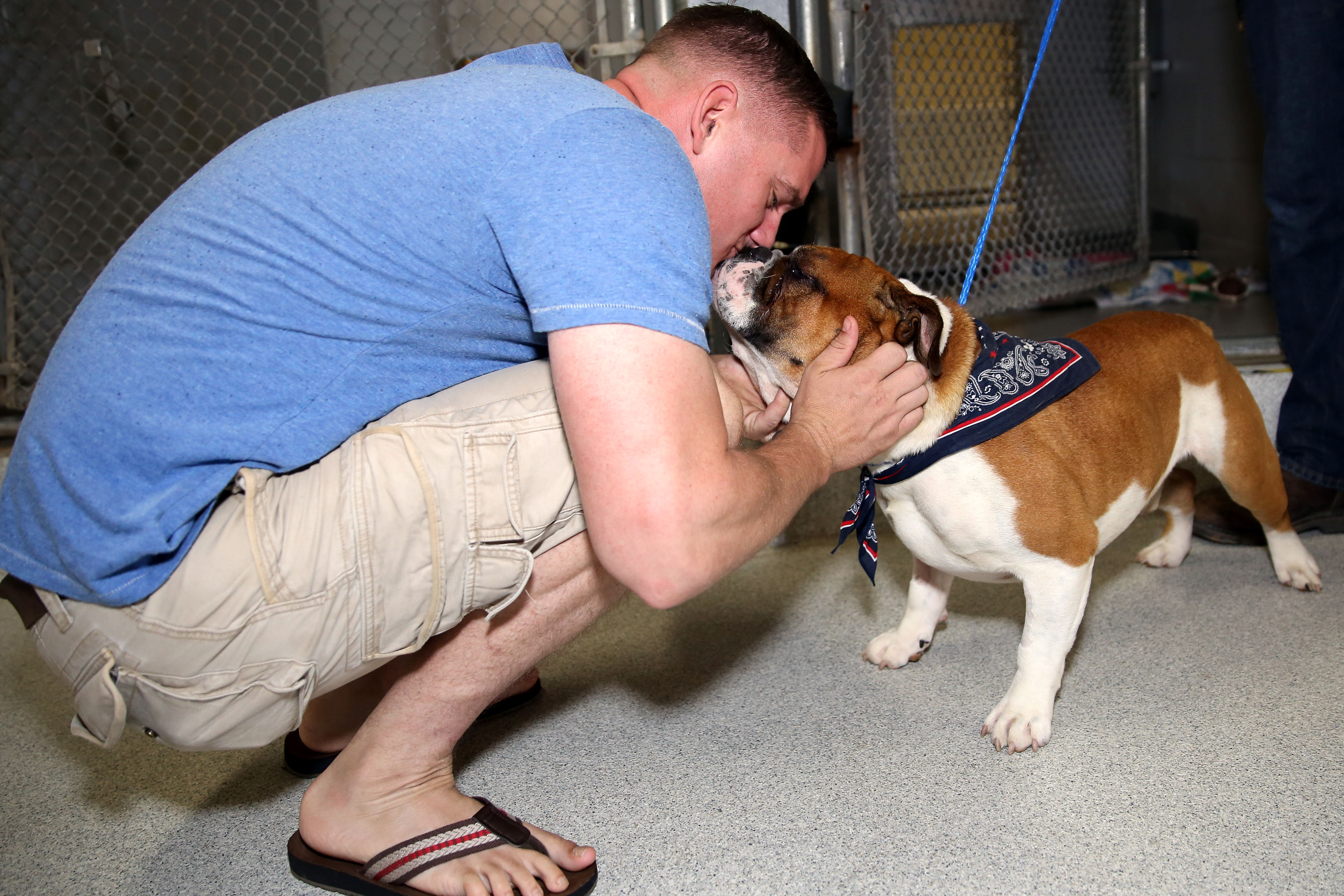
- Step 4: Attend a meet-and-greet at the relevant shelter — bring all household members, including resident dogs where possible.
- Step 5: If the match is approved, complete the adoption paperwork, pay the adoption fee, and take your dog home.
- Step 6: Your dog arrives already desexed, microchipped on the NSW Pet Registry (in RSPCA's name initially — transfer to your name within 7 days), vaccinated (C5), flea and worm treated, and vet-checked.
- Step 7: Transfer NSW Pet Registry ownership to your name at petregistry.nsw.gov.au within 7 days of adoption (Companion Animals Act 1998, s. 37).
AWL NSW and Sydney Dogs & Cats Home: the alternatives
AWL NSW at Kemps Creek operates on a broadly similar model to RSPCA NSW — application, assessment, meet-and-greet, adoption with inclusions. Sydney Dogs & Cats Home in St Peters is a different model: it is both a council contract facility (handling City of Sydney pounds) and a rescue organisation. Its location in the inner city means it has a high throughput of urban strays and surrenders, and adoption of a pound dog from Sydney Dogs & Cats Home is typically faster and simpler than the RSPCA or AWL process, though with less behavioural assessment.
For those interested in a specific breed, PetRescue (petrescue.com.au) is the single best aggregation tool in Australia. It pulls listings from RSPCA NSW, AWL NSW, Sydney Dogs & Cats Home, and hundreds of smaller NSW rescue groups, and lets you filter by breed, age, size, location, and suitability (good with children, good with other dogs, experienced owner required). Once you find a dog on PetRescue, you click through to the individual organisation to apply — PetRescue itself is not the rescue. It is the directory.
What is typically included with a rescue dog in NSW
- Desexing: included at all major NSW rescue organisations; a desexed dog also attracts the lower lifetime NSW registration fee (A$60 vs A$222)
- Microchipping: included; ISO-compliant 15-digit chip, NSW Pet Registry entry — you must transfer ownership to your name within 7 days
- C5 vaccination: included (covers Distemper, Hepatitis, Parvovirus, Parainfluenza, and Bordetella); ongoing annual C5 boosters are your responsibility
- Flea and intestinal worm treatment: current at time of adoption; you take over prevention from day one at home
- Vet health check: included; most organisations provide documentation of any known health issues
- Council registration: your NSW Pet Registry entry transfers to lifetime registration in your name — confirm this with the organisation, as some handle it differently
- NOT included: heartworm prevention, paralysis tick prevention (essential in Sydney — start this within days of adoption), obedience training, dental care going forward
Breed-specific rescues in Sydney: when you have a specific breed in mind
If you have your heart set on a specific breed — a Greyhound, a Labrador, a Golden Retriever, or a breed with a specific suitability profile — there are breed-specific rescue organisations across NSW that specialise in that breed. Greyhound Rescue (greyhoundrescue.com.au) is the most prominent in Sydney, operating a foster network of ex-racing greyhounds ready for adoption as companions. They are, contrary to their reputation, gentle, low-energy, low-maintenance apartment and house dogs that rarely need the running exercise that the greyhound racing image implies — though they do need occasional off-leash running in a secure area.
If rescue isn't the right fit: responsible breeders in NSW
Some prospective owners need a dog with a known breed history, a specific adult size, or a predictable temperament profile for working or disability-assistance reasons — or they have lifestyle or medical circumstances that make rescue unpredictable adult dogs a genuine risk. In those cases, a responsible registered breeder is the right route. In NSW, responsible dog breeders are registered with the NSW Department of Primary Industries under the Companion Animals Act (breeder's identification number required on all advertising) and many are additionally members of Dogs NSW (dogsnsw.org.au), the ANKC-affiliated body for purebred dogs in NSW.
- Dogs NSW (dogsnsw.org.au): the ANKC affiliate in NSW; search for registered breeders by breed; members must follow the ANKC Code of Ethics including mandatory health testing for breed-specific conditions
- ANKC registration number: any legitimate pedigree puppy in NSW has an ANKC "main register" or "limited register" certificate — ask for this at purchase
- Breeder ID number: since 2020, NSW breeders must display their Department of Primary Industries breeder identification number on all advertisements; this is separate from the ANKC registration
- Health testing: responsible breeders provide results of breed-relevant health tests — hip/elbow scores for Labradors and German Shepherds, cardiac checks for Cavalier King Charles Spaniels, BOAS assessment for French Bulldogs and Pugs
- Never buy without seeing the puppy with its mother: legitimate breeders always permit this; those who don't are concealing something
- Pet shops and third-party brokers: not recommended; NSW allows pet shop sale of animals, but provenance is rarely verifiable; traceability to a responsible breeder is the standard you should require
After adoption: your legal obligations under NSW law
Once you bring a dog home in NSW, several legal steps are your immediate responsibility. Transfer the NSW Pet Registry ownership record to your name within 7 days (CAA s. 37) — you do this at petregistry.nsw.gov.au. Confirm that the lifetime registration is active in your name. Start paralysis tick prevention immediately — this is not a legal obligation but is a veterinary and welfare imperative in Sydney. Book a vet appointment within the first week to establish a relationship, confirm the dog's health, and start any ongoing preventive health program your vet recommends.
Sources & references
- RSPCA NSW — Adopt a dog
- AWL NSW — Animal Welfare League NSW adoptions
- Sydney Dogs & Cats Home
- PetRescue — Adopt a pet (NSW)
- Greyhound Rescue NSW
- Dogs NSW — Find a registered breeder
- Companion Animals Act 1998 (NSW) — NSW Legislation
- NSW Pet Registry — Transfer of ownership
OurPetCircle content is researched from the sources above and is queued for expert sign-off. It is general guidance and not a substitute for advice from your own vet, a qualified trainer or relevant official authorities.