
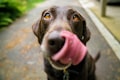




Greyhound
Also known as: English Greyhound
The world's fastest dog breed and an ancient sighthound - but, contrary to its athletic look, a famously gentle, quiet "45-mph couch potato" that loves to lounge. Greyhounds are calm, affectionate and surprisingly low-maintenance indoors, needing only short daily sprints and offering a dignified, companionable presence in return.
Origin and purpose
The Greyhound is one of the most ancient sighthound types, depicted in art for thousands of years and bred to course game by sight and speed. In the modern era it became the basis of dog racing, and many pet Greyhounds today are retired racers rehomed as companions.
Temperament
Breed authorities describe the Greyhound as gentle, even-tempered, quiet and affectionate — content to sleep most of the day and rarely vocal — combined with an instinctive urge to chase fast-moving things. It is sensitive and trains best with gentle methods. As for all dogs, the individual and its history shape behaviour far more than the breed (Morrill et al., Science 2022).
Health and longevity
The Greyhound has relatively few inherited disorders, but its sighthound physiology and a small number of breed-specific risks warrant attention.
Common health conditions
Living with a Greyhound in Barcelona
This section is specific to Barcelona (Ajuntament de Barcelona / Col·legi de Veterinaris de Barcelona). The rest of this guide applies to the breed anywhere.
Protectora de Animals de Barcelona / CAAD: Not eligible
This breed is not eligible for Protectora de Animals de Barcelona / CAAD.
Licensing
All dogs must be registered in the cens municipal d'animals de companyia at the Ajuntament de Barcelona (cita prèvia: ajuntament.barcelona.cat/tramits); microchip required; annual rabies vaccination recommended though Spain (mainland) is rabies-free since 1978. PPP licence holders also require mandatory civil liability insurance (seguro de responsabilidad civil). Source: Ajuntament de Barcelona; Ley 7/2023 de Bienestar Animal.
Climate & exercise in Barcelona
Barcelona is Mediterranean; hot dry summers (Jun–Sep, 28–33°C); mild winters (Dec–Feb, 8–14°C); spring and autumn pleasant; occasional cold tramuntana wind from north. walk before 9am or after 7pm in July and August; pavement in direct sun on the Rambla and Barceloneta can reach 50°C+ at midday — test with your hand; sea breeze from the Mediterranean provides relief near the waterfront from mid-afternoon. Barcelona's Mediterranean heat peaks July–August (28–33°C with high coastal humidity); brachycephalic breeds (French Bulldog, Bulldog, Pug, Shih Tzu) face elevated heatstroke risk — limit outdoor exercise to early morning or evening during heat peaks. Leishmania is the most significant endemic canine disease in Catalonia: transmitted by sand flies active from dusk to dawn May–October; preventive treatment (collar or spot-on/oral) plus annual serological screening is strongly recommended by Catalan vets.
Parasite prevention
Plan for year-round flea prevention essential (mild winters mean no flea-kill season in coastal Catalonia); Leishmania risk (Leishmania infantum, transmitted by sand flies Phlebotomus perniciosus) is significant in Barcelona — monthly preventive collar or oral treatment recommended May through October; tick prevention for dogs accessing Collserola Natural Park, Serralada de Marina, and inland areas year-round; heartworm (Dirofilaria immitis) risk in coastal areas — annual prevention recommended.
Cost of ownership in Barcelona
Local Greyhound cost figures for Barcelona are being verified. Budget for purchase or adoption, initial setup, food, grooming, routine veterinary care, parasite prevention and pet insurance. Figures are quoted in €.
Health & longevity
Responsible breeders health-test their breeding dogs. Ask to see current certificates before committing.
Nutrition note: Naturally very lean sighthound; maintain the breed's slim body condition and prioritise dental care (kibble alone is insufficient).
Known breed conditions
DNA & screening panel
Cost of ownership
FLAG: indicative Singapore estimate only — dental care and any osteosarcoma treatment can raise cost.
Registries
Sources & references
- AKC — Greyhound breed standard & traits[Breed standard / registry]
- The Kennel Club (UK) — Greyhound[Breed standard / registry]
- Merck Veterinary Manual — hereditary and breed-associated disease[Veterinary reference]
- NParks/AVS — Pets in HDB flats (approved small breeds; ≤55 cm shoulder height)[Breed standard / registry] · checked June 2026
- Morrill et al., "Ancestry-inclusive dog genomics…", Science 376 (2022) — breed ≈ 9% of behaviour[Peer-reviewed / VetCompass / OFA] · 2022
Source tiers: 1 = breed standard / registry authority; 2 = peer-reviewed / VetCompass / OFA; 3 = veterinary reference; 4 = encyclopaedic. OurPetCircle cites only tiers 1–4 and never blogs or e-commerce pages. Behavioural traits carry low confidence — breed explains ~9% of individual behaviour variation (Morrill et al., Science 2022).
Image credits
- Image 1: Neurodoc · CC BY-SA 3.0 · via Wikimedia Commons
- Image 2: Shaz91 · CC BY 3.0 · via Wikimedia Commons
- Image 3: Supreme Chungus · CC BY-SA 4.0 · via Wikimedia Commons


