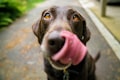




German Shorthaired Pointer
Also known as: GSP, Deutsch Kurzhaar, Deutscher Kurzhaariger Vorstehhund
A versatile, athletic German hunting dog bred to point, retrieve and track on land and water - supremely energetic, intelligent and trainable. The GSP is friendly, affectionate and great with active families, with an easy-care short coat and a willing, enthusiastic approach to everything from field work to family life.
Origin and purpose
The German Shorthaired Pointer was developed in late 19th-century Germany as an all-purpose gundog — pointing, retrieving and tracking game on land and in water — by blending pointing breeds with scent hounds. The result is one of the most versatile and athletic sporting dogs.
Temperament
Kennel authorities describe the GSP as friendly, intelligent, eager and highly trainable, affectionate with its family and biddable in the field — a true working partner. It needs abundant exercise and stimulation. As always, the individual dog and its upbringing predict behaviour far more than the breed label (Morrill et al., Science 2022).
Health and longevity
The GSP is a generally robust breed. Buy from breeders who screen hips, eyes and run the relevant DNA tests.
Common health conditions
Living with a German Shorthaired Pointer in Vancouver
This section is specific to Vancouver (Canadian Food Inspection Agency (CFIA)). The rest of this guide applies to the breed anywhere.
Toronto Animal Services
Dogs in Toronto must be licensed annually with Toronto Animal Services. There is no provincial housing breed restriction on licensing, but Ontario's Dog Owners' Liability Act (DOLA) bans pit bull-type dogs from the province — this applies citywide regardless of housing type.
Toronto Humane Society / Toronto Animal Services: Not eligible
This breed is not eligible for Toronto Humane Society / Toronto Animal Services.
Licensing
Toronto dog licence required annually from Toronto Animal Services: CAD $32/year (sterilised) or CAD $78/year (unsterilised); microchipping strongly encouraged. Source: Toronto Animal Services (toronto.ca/community-people/animals-and-pets/pets-in-the-city/dogs/).
Climate & exercise in Vancouver
Vancouver is humid continental; cold winters (Jan avg -5°C, windchill to -20°C); warm humid summers (Jul avg 27°C); road salt season November through March. walk before 8am or after 7pm in July and August; pave test before midday walks — Toronto pavement can exceed 55°C in direct summer sun. Toronto's humid summer heat raises risk for brachycephalic breeds (French Bulldog, Pug, Bulldog) in July–August; road salt and ice-melt chemicals on sidewalks November–March require paw-washing after every winter walk; the Rouge Valley and Don Valley ravines are prime Ixodes scapularis tick habitat.
Parasite prevention
Plan for Lyme disease tick (Ixodes scapularis, blacklegged tick) present in Toronto ravines and Rouge National Urban Park — prevention April through November; heartworm prevention June through November (Ontario mosquito season); road salt paw protection November through March.
Cost of ownership in Vancouver
Local German Shorthaired Pointer cost figures for Vancouver are being verified. Budget for purchase or adoption, initial setup, food, grooming, routine veterinary care, parasite prevention and pet insurance. Figures are quoted in $.
Health & longevity
Responsible breeders health-test their breeding dogs. Ask to see current certificates before committing.
Nutrition note: Lean athletic build; deep-chested — split meals and avoid heavy exercise around feeding to lower bloat risk.
Known breed conditions
DNA & screening panel
Cost of ownership
FLAG: indicative Singapore estimate only — high enrichment/exercise needs; any bloat surgery adds cost.
Registries
Sources & references
- AKC — German Shorthaired Pointer breed standard & traits[Breed standard / registry]
- The Kennel Club (UK) — German Shorthaired Pointer[Breed standard / registry]
- Merck Veterinary Manual — hereditary and breed-associated disease[Veterinary reference]
- Orthopedic Foundation for Animals (OFA) — breed health screening / CHIC testing[Peer-reviewed / VetCompass / OFA]
- NParks/AVS — Pets in HDB flats (approved small breeds; ≤55 cm shoulder height)[Breed standard / registry] · checked June 2026
- Morrill et al., "Ancestry-inclusive dog genomics…", Science 376 (2022) — breed ≈ 9% of behaviour[Peer-reviewed / VetCompass / OFA] · 2022
Source tiers: 1 = breed standard / registry authority; 2 = peer-reviewed / VetCompass / OFA; 3 = veterinary reference; 4 = encyclopaedic. PawHub cites only tiers 1–4 and never blogs or e-commerce pages. Behavioural traits carry low confidence — breed explains ~9% of individual behaviour variation (Morrill et al., Science 2022).
Image credits
- Image 1: Bonnie van den Born (bonfoto.nl) · CC BY-SA 3.0 · via Wikimedia Commons
- Image 2: Wikimedia Commons contributor · CC BY-SA 3.0 · via Wikimedia Commons
- Image 3: Metsosuon kennel / Seppänen · CC BY-SA 3.0 · via Wikimedia Commons


